
What's the Best Bitcoin Wallet? (and How Does One Work?): Crypto Wallets Explained
Crypto wallets are central to buying and exchanging crypto. But what’s the best Bitcoin wallet? And how do crypto wallets work? We explain it all here.

Before you can buy, exchange, or do anything else in the world of crypto, you need a cryptocurrency wallet. But crypto wallets are more than — and in many ways different from — the wallet you probably have in your pocket.
What is a cryptocurrency wallet?
Rather than storing actual coins or bills, a cryptocurrency wallet stores a pair of cryptographic “keys”: a private key and a public key. These keys are very long, unique strings of numbers and letters that prove your right to spend the coins associated with that key pair. Without getting too technical, think of your public key as your bank account number and your private key as your PIN: one tells people where to send coins, and the other is what you need to prove ownership and authorize transactions.
The term “wallet” can actually describe several kinds of software or hardware. What they all have in common is that they store the private and public keys that give you access to your crypto and allow you to transact on a blockchain network.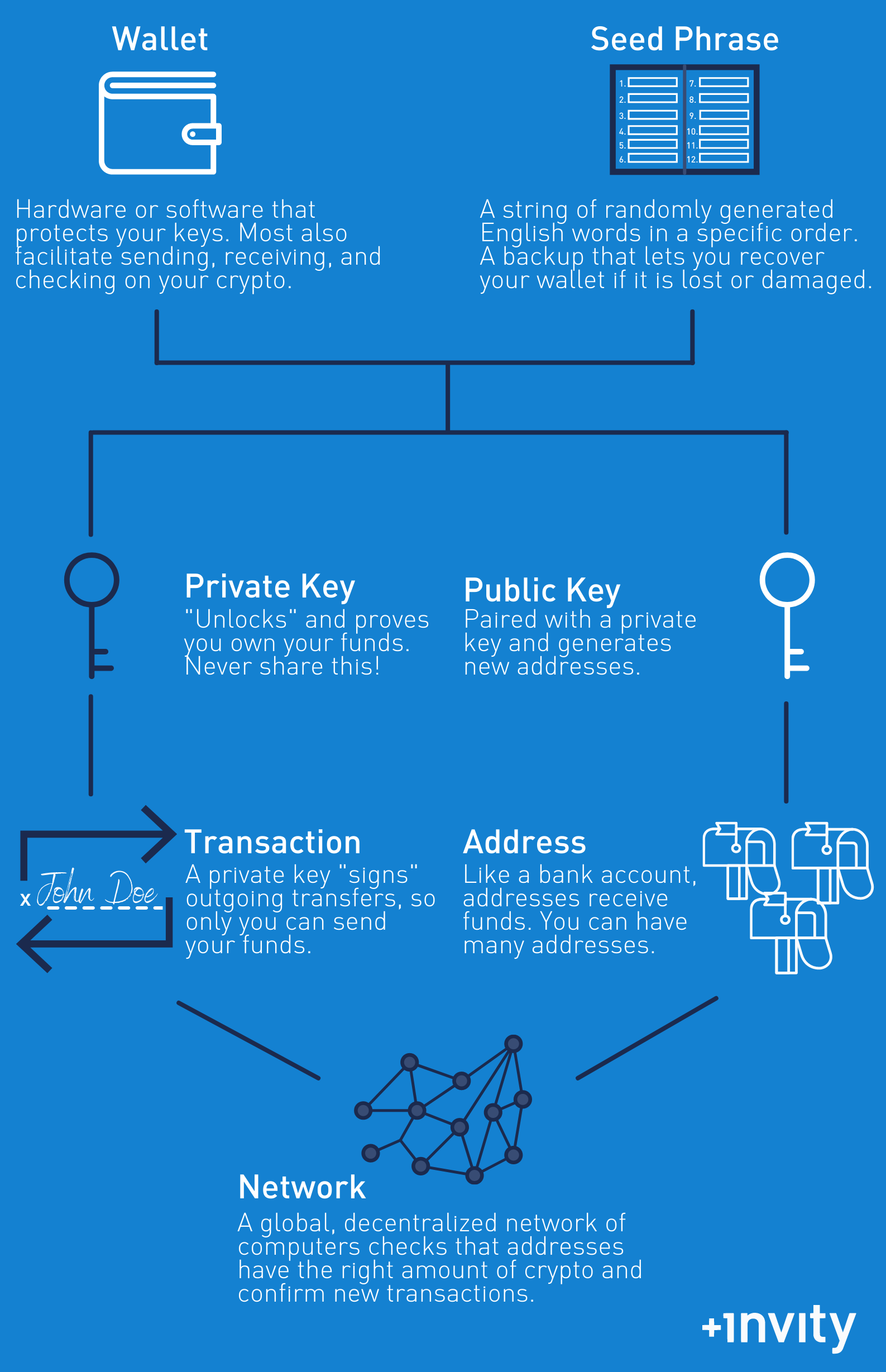 A diagram to how private keys work along with other need-to-know topics. By Invity.
What are the different types of cryptocurrency wallets?
Hot wallets
A hot wallet is any wallet that is connected to the internet. These are the most common type of wallet for everyday use because they’re convenient and easy to access. Examples include browser extensions, mobile apps, and web wallets provided by exchanges. The tradeoff is that because they’re always online, they’re more vulnerable to hacks and malware.
Cold wallets (hardware wallets)
Cold wallets store your private keys offline, making them nearly immune to online attacks. A hardware wallet is a physical device (like a USB stick) that stores your keys and only connects to the internet when you want to make a transaction. This is the gold standard for securing significant amounts of crypto. Popular options include Trezor and Ledger.
Paper wallets
A paper wallet is simply your private and public keys printed on paper. It’s extremely secure against digital threats but vulnerable to physical risks like fire or water damage.
What’s the best Bitcoin wallet?
The best wallet depends on your needs:
- For everyday small transactions: A mobile hot wallet offers convenience.
- For long-term storage of significant amounts: A hardware wallet like Trezor is strongly recommended.
- For maximum security: Combine a hardware wallet with a securely stored seed phrase backup.
Whatever wallet you choose, the most important thing is to keep your private key and seed phrase safe and secret. Never share them with anyone, and store your seed phrase in a secure physical location — not just digitally.


