
Crypto Transaction Fees: How Much it Costs to Send Bitcoin
Crypto transaction fees keep decentralized networks running and in the hands of users. But how are crypto transaction fees set, and why do they change?

As with other financial services, there’s a cost associated with sending crypto from one person to another. The difference is that cryptocurrency transaction fees serve as a way to maintain the network and encourage widespread participation — not to make intermediaries rich.
What are crypto transaction fees?
A transaction fee is the amount of money it takes to successfully send digital assets from one crypto wallet to another. Fees compensate for the technological cost of sending transactions and incentivize other users to keep the network decentralized.
When you send a Bitcoin transaction from your public key to someone else’s, you’re recording a set of information in a ledger anyone can read (including the recipient, sender, time, and amount). This is stored in a block waiting to be added to the blockchain. Transaction fees are paid to the miner who validates a block first, encouraging miners to continue contributing their computing resources.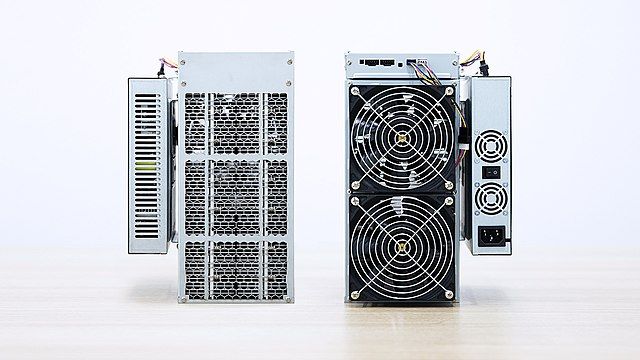 A specialized Bitcoin mining machines used to validate new transactions. By Canaan, licensed under CC BY-SA 4.0.
Why are Bitcoin’s transaction fees constantly changing?
There’s no fixed rule that determines how much a Bitcoin transaction costs to send. Transaction fees are essentially a matter of supply and demand: each user decides how much they want to spend and miners determine whether the proposed fee is rewarding enough.
When not many people are trying to spend Bitcoin, there’s less traffic and blocks can be confirmed quickly without anyone spending much money. However, when everyone is trying to trade Bitcoin at once, transactions with the highest fees get prioritized since miners want the largest reward. This means that during peak periods, fees can be substantial — averaging around $37–$59 during high-activity periods.
What are the benefits of Bitcoin’s transaction fee model?
The main benefit is that it allows the network to stay free from a central authority. Unlike traditional money transfers where intermediaries profit substantially, Bitcoin participants are equal — other users are simply enticed to lend their resources by potentially earning the transaction fee as a reward.
Another benefit: Bitcoin fees are set at a flat rate regardless of the amount you’re sending. This makes Bitcoin especially useful for global remittances where percentage-based fees in traditional finance can be substantial and prohibitive.


