
What is crypto custody and why is it important?
Keys, coins, custody: here's why keeping your coins off exchanges and in self-custody is important when getting started with crypto.

A major topic in the world of crypto is custody. Bitcoiners talk about it in sometimes heated terms, countless companies offer different solutions for it, and your relationship to it is something to decide even before you make your first Bitcoin transaction. Yet knowing what custody means is also something many in the crypto community take as a given. Luckily, this short guide to crypto custody will shed some light on this need-to-know crypto topic from the ground up.
What is custody?
Just like with children, criminals, or valuables, custody means who has control over something. So when it comes to Bitcoin and altcoins, a simple shorthand for custody is who controls your coins.
Since your bitcoins only exist as bits of code engraved unchangeably on the blockchain, it’s not really useful to talk about who owns the coins themselves. Instead, we need to talk about keys.
As you’ll recall from Invity’s explainer on keys, every time you start working with crypto you’ll create a set of one private key and one public key. Your unique private key is like your online banking password, your front door key, or an all-access backstage pass: it identifies you as the owner of certain coins, lets you check your “balance”, and importantly allows you to send your coins anywhere you wish. Since your keys are the actual keys to controlling your coins, crypto custody means having control over your keys and therefore your coins. This is why you’ll often hear the catchphrase “Not your keys, not your coins.”
What types of crypto custody are there?
(Don’t) keep it on an exchange
One place many people start with crypto is on large multinational custodial exchanges. You’re probably familiar with these: Coinbase, Binance, Kraken, and many others besides. When you buy and trade coins on these exchanges, they may not be transferred to your own wallet. More often the coins you “buy” are simply allocated to your account. In other words, “your” coins are simply added to a giant spreadsheet next to your name while the exchange holds custody of your coins for you—in their wallet, with their keys. Excerpt from Coinbase’s 10Q document. Source: @sophiamzaller via Twitter.
This may seem like an okay trade-off for convenience…until you start looking at the fine print. If you leave your coins in an exchange’s hands and the exchange collapses (or is hacked, as happens rather frequently), your assets are gone too and you won’t be made whole.
This is why Invity only connects our users to noncustodial exchanges. These services let you buy or exchange crypto “direct to custody”: your coins are sent to the wallet of your choosing and are never held on an exchange.
Get your own wallet
We’ve got a full-length explainer on Bitcoin wallets, but the short version is that wallets both protect and let you use your own keys. This is what the crypto community usually refers to as “self-custody”.
Hot wallets are usually apps where, after downloading to your phone, you can create the keys you need. These are great for convenience. For long-term, larger crypto investments, the only way to go is a cold wallet. Cold wallets, also called hardware wallets, are standalone gadgets that secure your keys offline: they’re only active when you plug them into your computer and unlock them with a few layers of security.
We recommend that anyone interested in a hardware wallet go for a Trezor, the first and widely recognized as the most secure wallet on the market. **Invity’s network of noncustodial exchanges is fully integrated into **Trezor hardware wallets, meaning any coins you purchase will be sent directly to cold storage.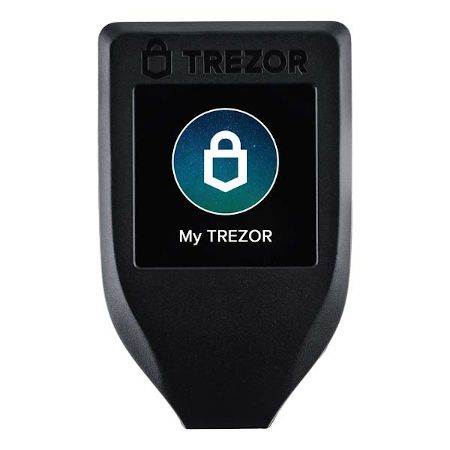 The Trezor Model T hardware crypto wallet by Trezor.
Hey big spender: third-party custody
Self-custody in a hardware wallet is usually the final word for average consumers who want to secure their keys and coins. However, for crypto investors who are dealing with huge amounts of crypto, there are third-party solutions who secure and manage investments on an institutional scale.
So let’s briefly summarize: Crypto custody means having personal control over your keys and therefore your coins. Keeping your coins off exchanges and putting them into self-custody in a wallet is the best way to protect your investment. And choosing a cold storage hardware wallet is the best way to protect your keys.


